
Indoor Plants
 Design Expert Kruthi.C
 Share
Share
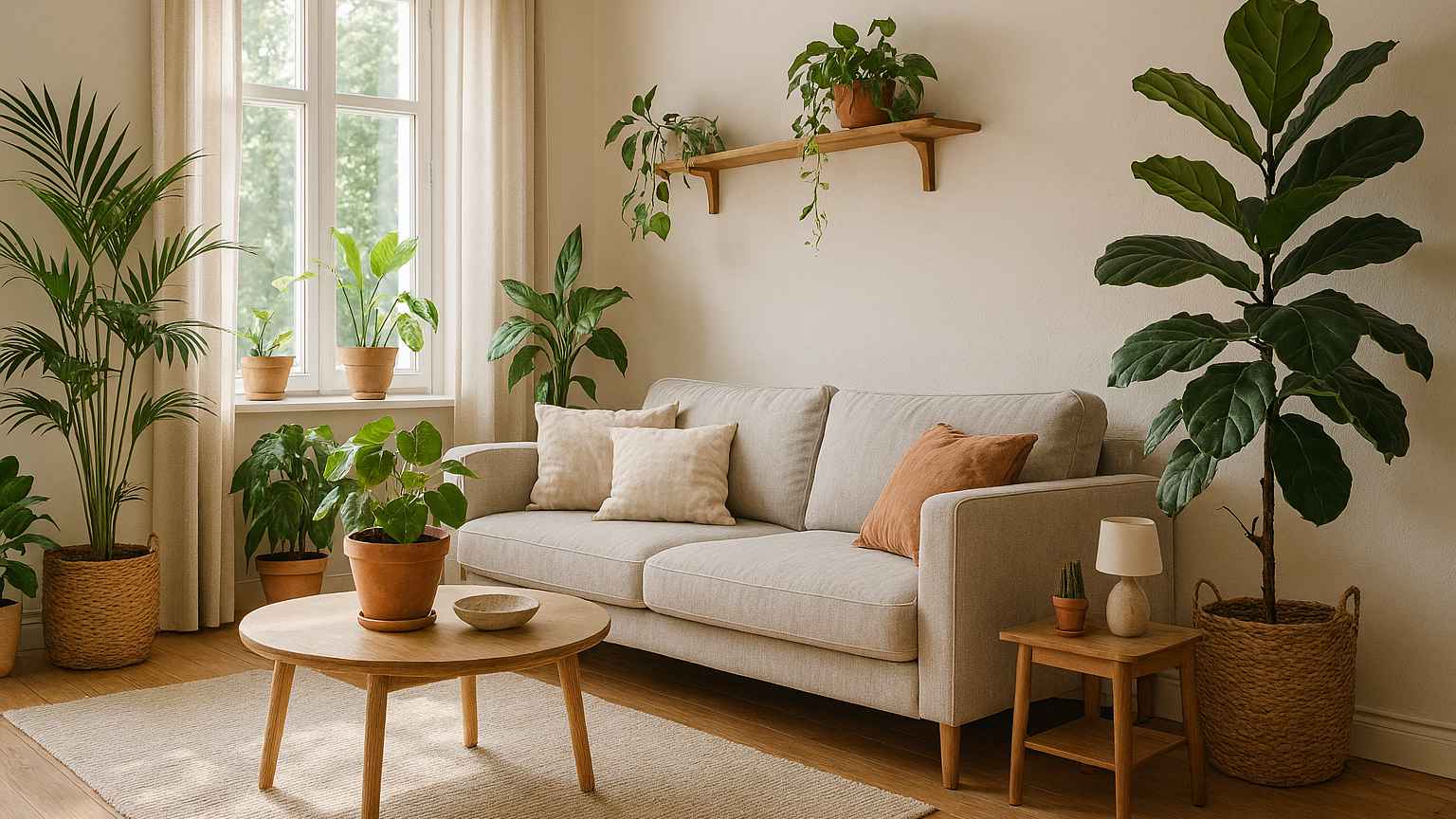
Looking for a proven way to melt away stress in today’s fast-paced world? Try a dose of green therapy! Surrounding yourself with indoor plants isn’t just about beautifying your space, it’s about creating a calming, restorative environment that promotes well-being.
Decorating with plants or embracing biophilic design a concept that brings elements of nature into your interiors, is one of the biggest design trends right now. From lush leafy corners to minimal succulent arrangements, the right plant décor can instantly lift your mood, improve air quality, and make your home feel alive.
Styling with plants is more than just placing a few pots around, it’s an art. It’s about learning how to balance greenery with your furniture, play with heights and textures, and choose planters that match your aesthetic. When done right, your indoor garden becomes both a style statement and a source of everyday peace.
How to choose your plant?
- Know Your Light Conditions
- Consider Your Lifestyle
- Check Space & Size
- Think About Air Purification
- Match with Your Interior Style
- Consider Pets & Kids
- Choose Based on Function
Where to place your plants?
- Living - Your living room is often the first place where you welcome friends and family, making it a reflection of your home’s style and warmth. This comfortable, inviting space with plenty of seating can feel even fresher with the addition of potted plants. Such plants thrive in indirect sunlight, moderate humidity, and the consistent room temperature indoors, allowing them to grow healthy and vibrant.
Ideal plants - Rhaphis Palm, Monstera, Umbrella Plant, Areca Palm, Fiddle leaf fig
- Dining - The dining room is more than just a place to eat—it’s where conversations flow, memories are made, and loved ones gather. Adding indoor plants to this space can instantly make it more inviting, fresh, and full of life. Consider placing larger potted options in corners or smaller arrangements as a centerpiece on your dining table. Proper watering and occasional misting will help these plants stay healthy, ensuring your dining area remains a lively and beautiful part of your home.
Ideal plants - Philodendrons, Money plant, Peace lily, Sansevieria Cylindrica, Rubber Plant
- Bedrooms - Placing indoor plants in your bedroom can enhance its comfort and serenity, turning it into a more peaceful retreat. Besides adding a touch of nature and beauty, these plants can also help purify the air and create a calm atmosphere conducive to better sleep. Make sure to select varieties that prefer lower light and keep them in well-draining pots. Regular watering and maintaining moderate humidity will help your bedroom plants flourish and add fresh energy to your personal space.
Ideal plants - Rubber plant, ZZ Plant, Snake plant.
- Study rooms - Placing indoor plants in your study room can do more than just enhance its aesthetics—it can actually boost focus, reduce stress, and create a refreshing atmosphere for long hours of work or study. Opt for low-maintenance plants. A small potted plant on your desk can add a touch of green without taking up too much space, while taller floor plants in the corner can bring balance to the room. For a creative twist, hanging planters or wall-mounted greenery can save desk space while keeping your environment lively. The right greenery not only complements your décor but also turns your study into an inspiring, energizing space.
Ideal Plants - Lucky Bamboo, Spider Plant, Marble pothos, Snake Plant
- Bathrooms - If you thought that the cold, damp bathroom was a bad place to grow plants, we have a surprise for you! Many plants thrive in high humidity, and do not need much sunlight. So why not add some greenery to your bathroom with ferns and money plants? High humidity and minimal sunlight gives these indoor plants the best possible environment to thrive.
Ideal Plants - Ferns, Syngonium, ZZ Plant, Pothos.
- Kitchen - You have probably considered the idea of growing herbs on your kitchen windowsill. We think this is a great idea, since you’ll have them at hand while cooking. And a dash of green will only liven up the space! With high humidity and long hours of sunlight, the kitchen helps in rejuvenating plants and helping them grow well, especially in hot summers.
Ideal Plants - Ferns, Philodendrons, Maranta, Calathea, Herbs.
- Balcony - At some point, we all have considered the idea of having a lush balcony garden. But have you thought about what plants actually grow well in your balcony? While some of us have the luxury of a bright and sunny balcony, others have cool and shady ones. However, your choice of plants depends on the kind of balcony your home boasts of. So, let’s find out what works best for your home! Bright sunshine and high temperatures aid their growth instead of withering them.
Ideal plants - Jade Plant, Cacti and succulents, Ponytail palm, Bougainvillea.
How to design your home with plants?
- Play with heights - Add some depth to your living room plant decoration ideas by placing your plants at different heights. While implementing these plant decoration ideas, aim at keeping smaller potted plants on shelves or cabinets/consoles. For the taller ones, you can keep them on the floor. Likewise, medium-sized plants can go on windowsills or niches, depending on your layout.
- Mix and match containers - Uniformity is not something we are striving for while implementing indoor plant decoration ideas. What you need is variety in your indoor plant design ideas. Pick different kinds of planters to mix things up in your home. While these pots and planters can be as different from each other as possible, they must be held together by a common thread.
- Introduce patterns - Just pick plants with leaves in different shapes. You can pair bushy plants with leafy ones for starters. Similarly, consider introducing patterns that weave in texture while selecting your pots and planters according to your living room design.
- Create focal points - Large plants make for excellent center or accent pieces when it comes to indoor plant decoration ideas for spacious homes. One large and healthy plant kept at the center of the room draws the eye instantly. In fact, you can also use tall plants to segregate space and work. It also does the job of being an aesthetic highlight of the room. Also, consider adding focus lights to help them stand out
- Pay attention to the dull corners - Are any empty corners in your home waiting to be filled? Pick a plant and a pot that fits the corner perfectly and place it there. Alternatively, you could keep a bunch of potted plants together to fill up the corner. Also, tiny tabletop potted plants make excellent bedside plant decoration ideas.
- Plants x Art - For the uninitiated, plants can be the perfect companion to artsy accents or paintings. This works particularly well if you have plenty of color in the artwork to complement your plant decoration ideas. Altogether, it can help create a rich bouquet of colors to pep up your interiors. Even if you don’t exactly have a painting to go with your plants, your planter can be the “art”, the center of attraction against a brighter background.
Terrarium
A terrarium is usually a sealable glass container containing soil and plants that can be opened for maintenance to access the plants inside; however, terraria can also be open to the atmosphere. Terraria are often kept as ornamental items.
Bonsai
Bonsai is the Japanese art of growing and shaping miniature trees in containers. Penjing and bonsai differ in that the former attempts to display "wilder, " more naturalistic scenes, often representing landscapes, including elements such as water, rocks, or figurines; on the other hand, bonsai typically focuses on a single tree or a group of trees of the same species, with a higher level of aesthetic refinement
How to take care of indoor plants?
- Ensure the soil in your pot is balanced; you don’t want soil that’s too dry or too wet
- Be sure to regularly water your plants to keep them hydrated and healthy. Stick your finger in the soil – water only when the top inch feels dry
- Try to place them in a room that receives some amount of sunlight. However, this will also depend on the type of plant you have, as not all of them require the same amount of sun
- Make sure the potting soil you use is nutrient-rich so your plants can grow well. At the time of buying your plants, be sure to check their care instructions from the vendor for the best results
- Feed plants during their growing season (usually spring and summer) with a diluted fertilizer according to package instructions
- Prune your plants as and when needed to promote the growth of new leaves
- Most plants prefer temperatures between 65-75°F (18-24°C). Avoid drafts and vents
- Tropical plants may benefit from a humidifier or pebble tray
- Plants outgrow their pots, so repot every 1-2 years into a slightly larger pot with fresh potting mix
- Wipe dusty leaves with a damp cloth to improve light absorption and appearance
Get in touch
We’re here to help!
We’d love to hear from you! Whether you have a question, need assistance, feedback, or just want to say hello, we’re here for you. Feel free to reach out, and we’ll be happy to help you in any way we can.
© 2026 Brigade Enterprises Ltd., All Rights Reserved.
This site is the exclusive property of Brigade Group